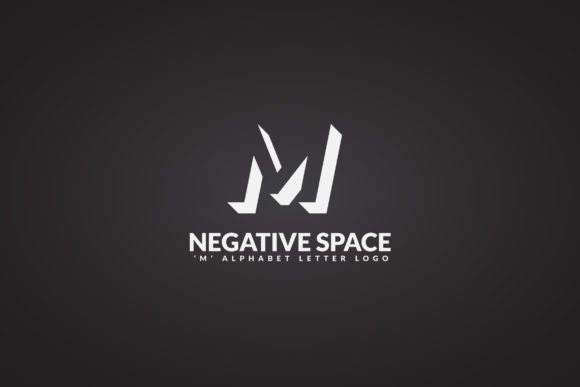
M Negative Space Logo: Smart Design That Works
You have probably seen an M negative space logo before and not even realized it. That is the point. The best uses of negative space feel effortless, almost inevitable. When someone looks at an M formed by the gap between two shapes or the curve of a single line, they get a small jolt of recognition. That moment of discovery is what makes this approach so effective for branding, packaging, and digital design.
Let us look at what makes the M negative space logo style worth your attention, where it fits best, and how to decide whether it belongs in your next project.
What Makes the M Negative Space Logo Distinctive
At its core, an M negative space logo relies on the empty areas around or within shapes to create the letterform. The letter M is not drawn explicitly. Instead, it emerges from the relationship between positive and negative space. This gives the design a clean, modern feel that works across many contexts.
Visual characteristics that stand out
The most effective M negative space logos share a few traits. They tend to be minimal, often using simple geometric shapes. The negative space is balanced carefully so the M reads instantly. The best examples feel like optical illusions that reveal themselves naturally rather than puzzles you have to solve.
Because the M is formed through negative space, the overall mark usually appears lighter and more open than a solid letterform. This creates a sense of airiness and sophistication. The style leans modern without feeling cold, approachable without being casual.
Personality and style range
Despite the constraints of the technique, M negative space logos span a wide personality range. A sharp, angular version with clean 45-degree cuts feels corporate and precise. A softer version using rounded forms feels friendly and modern. Some versions incorporate a subtle arrow or line extension that adds direction or motion without breaking the M silhouette.
The style is inherently creative without being fussy. It signals that a brand values clarity and cleverness. That combination appeals to entrepreneurs, designers, and marketers who want to communicate sophistication without extra decoration.
Where the M Negative Space Logo Works Best
This design approach is versatile, but it performs better in some contexts than others. Understanding where it shines helps you avoid forcing it into a project where a different typeface or mark would serve better.
Brand identity and logo design
The most obvious home for an M negative space logo is in brand identity itself. Tech startups, creative agencies, media companies, and modern product brands all benefit from the clean, memorable nature of this style. The negative space element gives people a reason to remember the logo. They feel clever for seeing it, which creates a small positive association with the brand.
For small business owners and entrepreneurs, an M negative space logo can look premium without requiring an elaborate illustration. It suggests intentionality. A coffee shop called Modern Roast or a design studio named Mosaic Creative could both use this approach effectively, but the execution would differ in weight and curvature.
Digital and web design
On screens, the M negative space logo works especially well because the clean lines and open space hold up at small sizes. Favicons, app icons, and social media profile pictures compress detail. A solid letterform can become a blob at 16 pixels. A well-constructed negative space M retains its shape because the emptiness is structural, not ornamental.
In web design, the M negative space logo pairs naturally with sans serif fonts for body text and modern typography for headings. The logo sets a minimal tone that carries through the rest of the site. If you are building a portfolio site, a landing page, or a product showcase, this style aligns with contemporary web design trends that favor whitespace and clarity.
Packaging and editorial design
Packaging designers use negative space logos to create distinction on crowded shelves. A simple M stamped on a box or bag looks refined. The blank space around the mark becomes part of the composition rather than wasted area. Editorial design also benefits because the logo sits well inside a grid system and does not fight with text or images.
For content creators and publishers, an M negative space logo works as a subtle watermark or chapter marker. It signals professionalism without dominating the page.
Social media and marketing materials
Social media graphics demand quick recognition. The M negative space logo delivers that. A profile picture that uses negative space reads faster than a detailed illustration. Marketing materials like brochures, business cards, and email headers also benefit because the logo reproduces cleanly in black and white or single-color printing.
If you are a marketer building a consistent brand across multiple channels, this style helps maintain visual coherence without needing a full suite of design assets for every format.
How the M Negative Space Logo Affects Perception and Engagement
Typography and logo choices influence how people feel about a brand before they read a single word. The M negative space logo operates on a few psychological levels that affect readability, hierarchy, and recognition.
Readability and visual hierarchy
Because the M is formed through negative space, it naturally draws the eye. The contrast between filled and empty areas creates a focal point. In a logo layout where the M sits above or beside the brand name, the negative space element anchors the composition. It tells the viewer where to look first.
This becomes useful in busy environments like a website header with navigation, a search bar, and a call-to-action button. The logo needs to cut through the noise. A negative space M does that without being loud. It earns attention through simplicity rather than size.
Brand perception and professionalism
Brands that use negative space effectively are often perceived as more innovative and trustworthy. There is a subtle message that says, "We thought about this. We did not just pick the first font that came up." That impression matters for freelancers, consultants, and small business owners competing against larger players.
A well-executed M negative space logo reads as premium even when the budget is modest. The design does the heavy lifting. It suggests the brand pays attention to details, which implies reliability in products or services.
Consistency and recognition across media
The true test of any brand mark is whether it works in a one-inch app icon and on a ten-foot banner. The M negative space logo passes that test because its structure is based on geometry. It scales cleanly. It reproduces in embroidery, foil stamping, and screen printing without losing its character.
For brands that produce content across print, digital, video, and physical products, this consistency builds recognition over time. People see the M enough times in enough places that it becomes familiar. That familiarity translates to trust.
Practical Guidance for Choosing and Using an M Negative Space Logo
If you are considering an M negative space logo for your own brand or a client project, a few practical considerations will help you make a sound decision.
Evaluating project fit
Start by asking whether the brand identity needs to communicate clarity, modernity, or cleverness. If the answer is yes to any of those, the M negative space logo is worth exploring. If the brand needs warmth, tradition, or ornamentation, a serif font or a handwritten script font may serve better.
Consider the industry. Tech, media, design, consulting, and lifestyle brands tend to align well with this style. Law firms, traditional financial services, and heritage brands usually need something more conventional. There are always exceptions, but fit matters more than personal preference.
Testing font pairings and supporting type
The right font pairing can elevate an M negative space logo. A clean geometric sans serif like a classic modern typeface creates a cohesive look. A neutral sans serif keeps the focus on the logo. For more personality, a subtle serif or a modern slab serif can add contrast without competing.
Avoid pairing the logo with another display font that has strong negative space tricks of its own. That creates visual noise. The logo should be the star. The supporting type should be functional and restrained.
Reviewing styles and readability considerations
If you are working with a commercial font that includes multiple weights, test the medium or bold weight for the logo itself. Hairline weights get lost in negative space designs. Heavy weights can collapse the M shape. The sweet spot usually sits in the middle where the negative space reads clearly.
Test the logo at the smallest size it will appear. If the M becomes ambiguous or looks like a smudge, the negative space ratio needs adjustment. Professional creative fonts and design assets usually include spacing and kerning that handle this well, but you should never skip the real-world test.
Commercial licensing and usage rights
Before you commit to an M negative space logo, confirm that the typeface or design asset you are using has appropriate commercial licensing. If you are using a premium font, check whether the license covers logo use, web embedding, and merchandise. Some foundries require an extended license for logo applications. Others include it in the standard package.
For entrepreneurs and small business owners, this step saves headaches later. You do not want to rebrand because of a licensing issue. For designers and marketers, clarifying licensing with clients upfront keeps the project running smoothly.
Making the M Negative Space Logo Work for Your Brand
The M negative space logo is not a trend that will fade next season. It is a design technique rooted in how human vision works. We fill in gaps. We look for patterns. When a designer builds an M from the space between shapes, they are working with that instinct rather than against it.
For anyone building a brand, whether you are a blogger launching a newsletter, a craftsperson opening a shop, or a creative professional growing a studio, this approach offers a proven way to look polished without overcomplicating things. The key is treating the negative space as intentional, not accidental. Every gap, every curve, every angle should serve the shape of the M and the story it tells.
Spend time testing variations. Look at how the logo behaves next to your brand name, on a dark background, inside a square crop, and printed at a small scale. The version that survives all those tests is the one worth keeping.