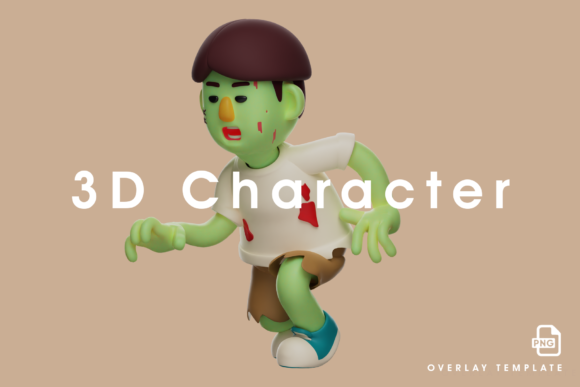
3D Zombie Design Having a Running Pose: What Sets It Apart and How to Choose the Right Approach
When developing 3D assets for games, animations, or virtual productions, the pose of a character significantly influences how that asset is used and perceived. Among the many zombie archetypes, a 3D zombie design having a running pose occupies a distinct and practical space. Unlike the slow, shambling walk or the erratic lunge, a running pose communicates urgency, threat, and a specific type of horror. This article examines what makes this design choice distinct, how it compares with alternative zombie postures, and when it serves a project best.
What Defines a 3D Zombie Design with a Running Pose
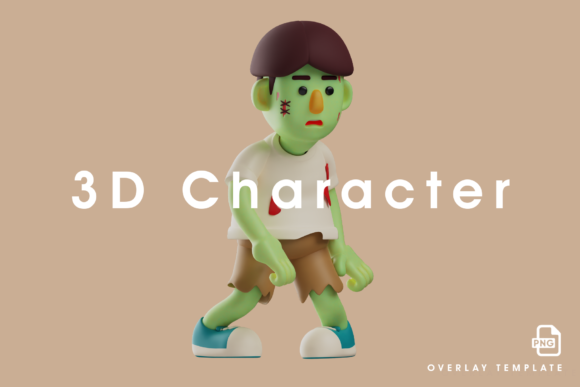
A 3D zombie design with a running pose is characterized by an asset that is modeled, rigged, and possibly animated in a forward-leaning, sprinting, or fast-loping stance. The pose is not merely a static frame from a walk cycle but a deliberate choice that implies high-speed pursuit. Unlike a neutral T-pose or a casual standing position, this design forces the viewer to imagine the zombie in motion, typically as an immediate threat.
Key visual traits of this pose include:
- Forward lean of the torso, often with arms extended or pumping
- Striding or lunging leg position, with one foot forward and the body weight shifted ahead
- Facial and body tension that suggests exertion, aggression, or single-minded pursuit
- Clothing and appendage dynamics that imply wind resistance or motion, such as torn clothes trailing behind
This design is distinct because it prioritizes kinetic energy and threat over atmosphere or dread. Where a static zombie may evoke unease, a running one triggers an immediate fight-or-flight response in the audience.
How a Running Pose Compares with Other Zombie Postures
To evaluate whether a 3D zombie design having a running pose is right for a project, it helps to compare it with the most common alternatives: the shambling walk, the aggressive stalk, and the idle or dormant stance.
Running Pose vs. Shambling Walk
The classic slow zombie, popularized by George A. Romero, typically uses a hunched, unbalanced walk with dragging feet. This pose emphasizes decay, inevitability, and the horror of an unstoppable force moving slowly. In contrast, a running pose swaps inevitability for immediacy. The shambling walk works well in survival horror games that rely on resource management and tension, such as early Resident Evil titles. The running pose suits action-horror or horde-based scenarios, like those seen in Left 4 Dead or World War Z, where fast zombies challenge players with reflex-based gameplay.
Tradeoff: A running pose reduces the subtlety of horror. It tells the audience exactly what to expect: speed and danger. A shambling walk leaves room for ambiguity and psychological dread.
Running Pose vs. Aggressive Stalk or Lunging Pose
Some designs use a half-crouch, arms-out, lunging posture that falls between a walk and a sprint. This pose can be versatile, allowing animators to blend it into both slow and fast movements. A running pose is more explicit. It signals the zombie's top speed immediately. If a designer wants flexibility, a neutral or moderately aggressive stance may be better, because it can be adapted to multiple animation states. However, a running pose is harder to repurpose for slow movement without looking mismatched.
Fit: A running pose is best when the zombie is always a sprinter. For mixed-speed zombies, a more neutral aggressive stance is safer.
Running Pose vs. Idle or Dormant Stance
Static poses—zombies standing still, slumped against a wall, or lying on the ground—are used for environmental storytelling. They save performance resources and create moments of calm. A running pose is essentially never idle; it is a pose that implies action even when stationary. This can make it unsuitable for levels that require pacing or surprise, because the threat is telegraphed clearly.
Strengths of a 3D Zombie Design in a Running Pose
Despite the tradeoffs, there are clear advantages to choosing this design approach.
- Immediate visual clarity: Players or viewers instantly understand the threat level. A running zombie communicates danger without needing animation or context, which is valuable in fast-paced games or trailers.
- Optimized for horde mechanics: When many zombies must appear threatening simultaneously, a running pose creates a uniform sense of urgency. This is especially effective in games where the player faces waves of enemies.
- Easier to rig and animate for speed: A model already posed in a sprint requires less interpolation to achieve a fast run cycle. This can reduce animation work and make the asset more efficient for small teams or tight budgets.
- Strong silhouette recognition: A forward-leaning, arms-out shape is distinct even at distance, which helps gameplay readability in third-person or isometric views.
Limitations and Situations Where a Running Pose May Not Fit
No single pose suits every project, and a running pose has specific constraints.
- Narrative dissonance: If your story establishes zombies as slow, decayed, or tragic, a running pose may contradict the lore. This can break immersion for audiences expecting a particular zombie logic.
- Animation blending challenges: A running pose is extreme. Transitioning from this pose to a walk, idle, or attack animation can look unnatural unless the rig is carefully designed and the animations are blended smoothly. This adds technical complexity.
- Limited emotional range: A running zombie is almost always aggressive and single-minded. If you need zombies that can appear confused, searching, or in pain, a running pose restricts those possibilities.
- Performance considerations: While not inherently more demanding, a horde of running zombies in a game environment may require more animation samples per second to look fluid, which can affect performance on lower-end hardware.
Decision Factors: Choosing the Right Pose for Your Project
When researching whether a 3D zombie design having a running pose is the best option, consider these factors.
Genre and Tone
For action-horror, tower defense, or co-op shooter games, a running pose matches the pace. For psychological horror, exploration games, or story-driven adventures, a slower or more varied pose may be more effective. Ask: does the zombie need to be scary because it is fast, or because it is inevitable?
Target Platform and Performance Budget
Mobile or VR projects often benefit from simpler animation states. A running pose that stays consistent can reduce the need for complex state machines. On PC or console, you have more freedom to blend poses, but a strong running base can still anchor the character identity.
Art Style and Animation Method
Realistic and semi-realistic styles often pair well with a running pose, especially if the anatomy follows human proportions. Stylized or cartoonish art may want a more exaggerated or unique pose to stand out. Also consider whether you are using hand-keyed animation, motion capture, or procedural systems. Some methods handle extreme poses better than others.
Reusability and Asset Libraries
If you plan to purchase or reuse 3D zombie assets, check the pose. A running pose asset may be cheaper or more available because it is popular for horde games. However, if you need flexibility, an asset in a neutral T-pose or A-pose allows you to rig and animate any movement later. Weigh the convenience of a ready-to-use running pose against the long-term flexibility of a neutral base.
Practical Examples of When a Running Pose Works Well
Consider a multiplayer survival game where zombies spawn in large numbers and charge the player. Here, a 3D zombie design having a running pose is ideal because it instantly signals threat, supports fast animation cycles, and aligns with the frantic gameplay. Similarly, a cinematic short film about a zombie outbreak may use running zombies to create intense chase sequences. In these contexts, the pose reinforces the visual storytelling.
On the other hand, a point-and-click adventure game set in a post-apocalyptic town might benefit from shambling or idle zombies. The slower pace allows players to examine environments and solve puzzles. A running pose would feel out of place and pressure the player unnecessarily.
Evaluating Alternatives: Not Just Pose, but the Whole Design
When comparing 3D zombie design having a running pose with other options, remember that pose is just one variable. Texture quality, rig complexity, polygon count, and material definition also affect how the asset performs. A running pose in a low-poly model may read differently than the same pose in a high-fidelity asset. Consider the whole package.
Some designers choose to create multiple variants: a running version for action sequences and a slower version for exploration. This approach increases production cost but offers the best of both worlds. For small teams, a single strong pose that fits the core gameplay loop is often smarter than trying to cover all scenarios.
Final Considerations for Informed Decision-Making
Choosing a 3D zombie design having a running pose is a practical decision that depends on your project's pace, narrative, and technical constraints. It excels in contexts where speed, clarity, and threat are paramount. It falls short where subtlety, flexibility, or narrative coherence are priorities. By weighing the strengths and limitations discussed here, you can make a choice that serves your audience and your workflow. Always test your asset in context: render it in your target environment, view it from typical camera angles, and see how it reads alongside other characters. The right pose should feel inevitable, not forced.