J Negative Space Logo: Why Hidden Meaning Creates Unforgettable Brands
Some of the most memorable logos in the world hide their deepest meaning in plain sight. When you look at the FedEx logo, there is an arrow hidden between the E and the x. The Amazon smile connects the a to the z, suggesting everything from A to Z. These are not accidents. They are intentional uses of negative space, the empty area around and between the visible elements of a design. A J negative space logo takes this same clever approach and applies it to one of the most common letters in branding. What makes this technique so compelling is not just the visual trick, but the way it rewards the viewer for looking closer.
When a designer crafts a logo using negative space, they are doing more than creating a mark. They are embedding a second message, a story, or a symbol that only reveals itself when the viewer gives the logo a moment of attention. That moment of discovery creates a small but significant connection between the brand and the person seeing it. It turns a passive viewing into an active engagement. For a brand, this can mean the difference between being glanced over and being remembered.
The Quiet Power of Hidden Visuals
Negative space design is not a new trend, but it has gained fresh momentum in recent years as brands look for ways to stand out in increasingly crowded markets. Consumers today are exposed to thousands of visual messages every day. Logos appear on screens, billboards, packaging, clothing, and social media feeds. To break through that noise, a logo needs to offer something more than just a name or an icon. It needs to invite curiosity.
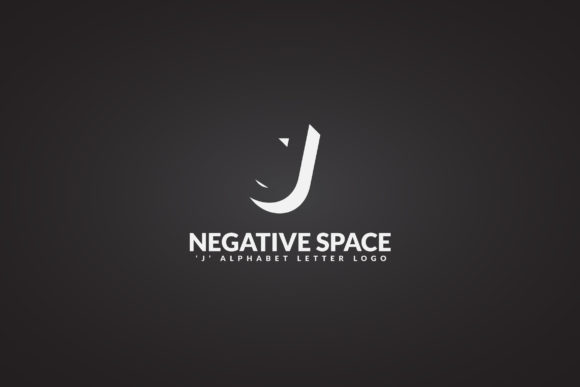
A J negative space logo does exactly that. The letter J is simple, curved, and open, which makes it a surprisingly versatile shape for hiding additional imagery. The curve of the J can become the outline of a face, the body of an animal, or the curve of a landscape. The stem can double as a tree trunk, a microphone stand, or a building. Because the letter is already minimal, any addition or subtraction of space around it feels intentional and meaningful. This is why many designers return to the J as a starting point for logos that need to communicate more than one idea at once.
There is also a practical advantage. Negative space logos tend to work well at small sizes. A complex logo with many lines and colors can become a blur when scaled down for a favicon or a social media avatar. A well-executed negative space logo retains its clarity because it relies on contrast and shape rather than intricate detail. For businesses that appear across many platforms, from print to mobile, this consistency is invaluable.
How the J Became a Canvas for Creativity
The letter J has a curious history. It was one of the last letters added to the Latin alphabet, emerging as a variant of I in the Middle Ages. For centuries, it remained a relatively minor character. Today, it appears in countless brand names, from major corporations to local startups. But the letter itself carries a visual rhythm that designers find useful. Its single stroke with a tail below the baseline creates a natural division of space. That division can be used to frame a secondary image without making the design feel crowded.
In recent years, the shift toward minimalism in branding has pushed more designers to explore negative space. Flat design, which emphasizes simplicity and clarity, pairs naturally with this approach. A logo that uses negative space does not need gradients, shadows, or extraneous elements to feel complete. The negative space itself becomes the decoration. This aligns with the broader movement in design toward purposeful reduction. Brands are asking themselves what can be removed rather than what can be added. A J negative space logo embodies that philosophy directly.
Another factor driving attention to this technique is the rise of storytelling in branding. Consumers increasingly expect brands to have a personality, a mission, or a narrative. A logo that contains a hidden element can serve as a visual shorthand for that story. A J that conceals a leaf suggests nature and growth. A J that forms a heart suggests care and connection. A J that becomes a bird suggests freedom or ambition. The viewer does not need to be told what the brand stands for. They can see it for themselves.
What This Means for Businesses and Creators
For business owners and entrepreneurs, the choice of a logo is often one of the first major branding decisions they make. A J negative space logo can be a strategic choice, not just an aesthetic one. Because the hidden image invites a second look, it creates a natural opportunity for word of mouth. People who notice the hidden element often point it out to others. This kind of organic sharing is rare in branding, and it comes at no additional cost.
For freelancers and solopreneurs who use their own name as a brand, a J negative space logo can be especially personal. The letter is often the first letter of a first or last name, and embedding a meaningful symbol within it can reflect the individual's values or services. A photographer with a J could hide a camera lens. A writer could hide a pen tip. A musician could hide a treble clef. The logo becomes not just a mark, but a signature.
Designers themselves have much to gain from mastering this technique. Creating an effective negative space logo requires a high level of skill. It demands that the designer think in terms of both the positive and the negative shapes simultaneously. This is not a task for a template or an automated logo generator. It requires custom work, careful observation, and frequent iteration. For designers who can deliver this, the result is a portfolio piece that demonstrates both creativity and technical ability.
Practical Considerations for a Successful Design
Not every J negative space logo succeeds. The most common mistake is forcing the hidden image to the point where the logo becomes illegible. If the viewer cannot recognize the letter J, the logo has failed its primary function. The hidden element should feel like a natural product of the letter's shape, not an afterthought or a puzzle. Balance is everything.
Another consideration is cultural context. A shape that reads clearly as one thing in one culture may read as something entirely different in another. Brands that operate internationally should test their logos with diverse audiences before finalizing them. What seems clever in one market may be confusing or even offensive in another. The goal is clarity, not mystery.
Color choice also matters. Negative space works best when there is strong contrast between the foreground and the background. Black and white is the most reliable combination, but a dark color on a light background or vice versa can also work well. Avoid using two similar tones, as this will flatten the illusion. The eye needs clear boundaries to perceive the hidden shape.
How to Evaluate Whether a J Negative Space Logo Fits Your Brand
If you are considering this style for your own brand, start by asking yourself what secondary meaning you want to convey. The hidden image should align with your brand's core message, not distract from it. If your brand is about simplicity, a complex hidden image might contradict that value. If your brand is about playfulness, a subtle inside joke could be perfect.
Also consider your audience. Younger audiences who grew up with visual culture and internet memes are often more attuned to hidden details and double meanings. Older or more traditional audiences may appreciate a straightforward logo that does not require interpretation. There is no right or wrong answer, only what fits your specific context.
Finally, think about longevity. A logo that relies on a trendy hidden image may feel dated in a few years. A logo that uses a timeless symbol, like a leaf, a star, or a circle, is more likely to endure. The best negative space logos are those that feel inevitable. Once you see the hidden element, you cannot unsee it, and it feels as though it was always meant to be there.
Why This Approach Matters More Now Than Before
Attention is the most valuable currency of the modern economy. Every brand competes for a fraction of a second of a potential customer's focus. A J negative space logo does not shout for attention. It earns it. By rewarding the viewer with a small discovery, it creates a positive association with the brand. That association may be unconscious, but it is real.
In a landscape where consumers are bombarded with information, simplicity paired with depth is a rare combination. A logo that is both minimal and meaningful offers the best of both worlds. It does not overwhelm the viewer, but it does not bore them either. It respects the viewer's intelligence by assuming they will notice the hidden detail. That respect, in turn, builds trust.
For creators, marketers, and business owners alike, the lesson is clear. The most effective branding does not tell people what to think. It invites them to discover something on their own. A J negative space logo is one of the most elegant ways to extend that invitation. It turns a simple letter into a conversation starter, and that is the kind of design that lingers long after the first glance.
Whether you are designing for yourself or for a client, take the time to explore the empty space. What you leave out can say as much as what you put in. In the world of logos, negative space is not empty at all. It is full of meaning waiting to be seen.