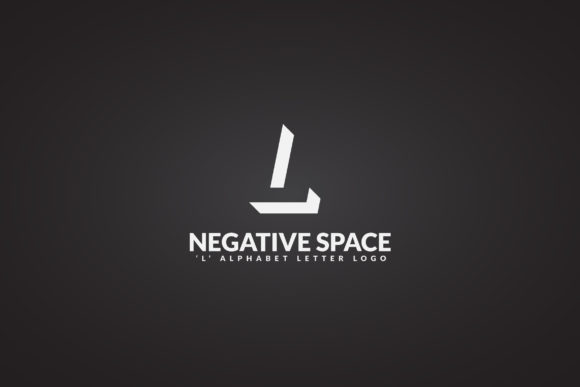
The Art of L Negative Space Logo Design: Simplicity Meets Symbolism
When you think about the most memorable logos in the world, what comes to mind? The swoosh that barely resembles motion. The apple with a bite taken out. The arrow hidden between two letters. These marks share a common thread: they use negative space to communicate more than what's immediately visible. Among the most elegant expressions of this technique is the L Negative Space Logo — a design approach that transforms a simple letterform into a layered visual statement. Whether you're a business owner exploring brand identity, a creator building a personal mark, or a professional evaluating design options, understanding how negative space works with the letter L can open up new ways of thinking about logos.
This article walks through what an L Negative Space Logo actually is, why it resonates with audiences, where it works best, and how to decide if it's the right fit for your project. No fluff, no hype — just practical insight drawn from real design thinking.
What Exactly Is an L Negative Space Logo?
At its core, an L Negative Space Logo uses the empty space around or within the letter L to form a secondary image, shape, or symbol. The letter L itself remains recognizable, but the negative space — the background or the cutout areas — creates an additional visual element. This could be anything from an arrow, a leaf, a building, a face, or an abstract shape that hints at what the brand represents.
The trick lies in the interplay between figure and ground. The designer doesn't just draw an L and then add something on top. Instead, they carve meaning out of the emptiness. The result is a logo that feels clever without trying too hard. It rewards a second look. And it embeds a layer of meaning that a straightforward letterform simply cannot deliver on its own.
The Psychology Behind the Letter L
Why L specifically? The letter L is structurally interesting. It has a sharp right angle, a long vertical stem, and a horizontal base. This geometry creates natural pockets of negative space — the interior corner, the area above the horizontal stroke, the space around the ascender. These pockets are perfect for hiding a secondary shape without forcing the design to become cluttered.
Psychologically, L also carries associations. It stands for "leader," "learning," "location," "light," depending on the context. A well-designed L Negative Space Logo can tap into those subconscious cues while still looking like a straightforward letter mark. That dual reading — first as a letter, then as a symbol — is what makes these logos stick in memory.
Why Designers and Businesses Turn to Negative Space
Negative space isn't a trend; it's a fundamental principle of visual perception. The human brain is wired to look for patterns, fill in gaps, and find meaning in ambiguity. When a logo requires a moment of discovery, it creates a small dose of delight. That delight translates into engagement, and engagement feeds recall.
For brands, this is gold. A logo that gets people talking — even silently, in their own heads — has already done half the work of brand awareness. An L Negative Space Logo achieves this without relying on loud colors, complex illustrations, or trendy effects that will date quickly.
Visual Efficiency and Brand Recall
One of the strongest arguments for using negative space is efficiency. A single mark communicates two things at once: the letter identity and a symbolic reference. This means the logo can remain minimal while carrying rich meaning. Minimal logos scale better across digital screens, print materials, signage, and merchandise.
Think of how quickly you scan a website header or a mobile app icon. A cluttered logo becomes noise. An L Negative Space Logo, by contrast, reads instantly as an L, but the hidden shape invites a longer look. That combination of instant recognition and deeper engagement is rare in logo design.
A Universal Design Language
Negative space transcends language. You don't need to read English to appreciate the cleverness of a shape emerging from an L. This makes the approach useful for brands that operate across cultures or aim for a global audience. The letter L may be from the Latin alphabet, but the visual puzzle it creates is universal.
Core Characteristics of Effective L Negative Space Logos
Not every attempt at an L Negative Space Logo succeeds. The best ones share a few consistent traits:
- Clarity of silhouette: The secondary shape must be readable at small sizes. If it looks like a blob at 16 pixels, the concept fails.
- Natural integration: The negative-space shape should feel inevitable, not forced. It should look as though the L always contained that image.
- Balance between letter and symbol: Neither element should dominate. The L should remain recognizable as an L, even after the hidden shape is discovered.
- Monochrome viability: The design must work in one color. If it relies on gradients or multiple hues to sell the illusion, it's too fragile.
- Timelessness over trend: The best negative-space logos avoid cultural references that will age. They lean on geometry and universal symbols.
These characteristics aren't theoretical — they emerge from decades of logo design practice. Brands that adopt an L Negative Space Logo with these principles in mind tend to keep their marks for years, even decades, without feeling the need to refresh.
Where L Negative Space Logos Shine
The versatility of this approach means it appears across many contexts. Here are the most common use cases, along with real-world-style examples to illustrate each.
Branding for Modern Digital Products
SaaS companies, mobile apps, and tech startups often need a logo that feels clean, smart, and scalable. An L Negative Space Logo fits naturally here. Imagine a productivity app called "Luminate." The L could house a subtle lightbulb shape in the negative space above the horizontal stroke. The association is immediate: light, insight, clarity. The logo works as a favicon, an app icon, and a loading animation mark equally well.
Local Businesses and Community Identity
For a local business, the logo needs to feel grounded and approachable. Suppose a coffee shop called "Lark & Loom" wants a mark that suggests both nature and craftsmanship. The L could integrate a leaf or a branch into the negative space around the vertical stem. The effect is organic without being literal. Patrons see it on signage, cups, and tote bags, and the visual cue sticks.
Personal Branding and Portfolios
Freelancers, consultants, and creatives often rely on a personal monogram. An L as a first or last initial is common, but adding negative space turns a basic initial into a conversation starter. A photographer named Liam could have an L that doubles as a camera aperture. A writer named Lucy could have an L that suggests an open book. The logo becomes a shorthand for expertise.
Real-World Scenarios and Applications
Let's walk through a few concrete scenarios where an L Negative Space Logo makes a measurable difference.
Scenario one: A co-working space called "Link." The logo uses an L that integrates an arrow pointing forward and upward in the negative space. The arrow suggests progress, connection, movement. Members see the logo on the door, on the website, on the Wi-Fi login page. It reinforces the idea that this space is about forward motion. The hidden arrow doesn't distract — it amplifies.
Scenario two: A legal consultancy run by a partner named Laura. The firm's logo is an L with a subtle gavel shape formed by the negative space in the corner. The design is serious but not stern, professional but not cold. Clients interpret it as attention to detail. The logo appears on contracts, letterheads, and the firm's LinkedIn page. It builds trust without saying a word.
Scenario three: A lifestyle blog called "Lucid." The blog's logo uses an L where the negative space forms a crescent moon. The association is calm, clarity, night-time reflection. The logo appears as a watermark on photos, as a favicon, and on social media avatars. Readers who notice the moon shape feel a small sense of discovery. That feeling keeps them coming back.
Strengths and Considerations
Every design approach has trade-offs. Understanding both sides helps you evaluate whether an L Negative Space Logo is right for your situation.
What Works Well
- Memorability: The dual-image effect creates a "aha" moment that helps people remember the logo.
- Scalability: Because the design relies on silhouette and contrast, it translates well from billboards to small screens.
- Professionalism: Negative-space logos often look polished and intentional, which can elevate brand perception.
- Longevity: These logos tend to avoid stylistic fads, making them suitable for brands that plan to exist for years.
- Conversation starter: The hidden element gives people something to notice and mention, increasing organic engagement.
Limitations to Keep in Mind
- Concept risk: If the negative space image is too obscure, most viewers will miss it entirely. The logo then becomes just a plain L, which may not carry enough weight on its own.
- Cultural blind spots: A shape that seems obvious in one culture may be meaningless or even confusing in another. Research matters when the brand crosses borders.
- Overused ideas: Some negative-space concepts — like an arrow in an L — are common. Standing out requires a thoughtful, original take.
- Print and production constraints: Very fine negative-space details can get lost in embroidery, embossing, or small-scale print. The design must be robust enough to survive real-world reproduction.
- Not always self-explanatory: Unlike a literal icon (like a house for real estate), a negative-space L requires interpretation. That's a feature, not a bug, but it means the logo does less heavy lifting on its own.
Evaluating Suitability for Your Project
How do you know if an L Negative Space Logo is the right direction? Start by asking a few questions:
- Is your brand name or personal name connected to a visual idea? If your name starts with L and your industry involves light, learning, land, leadership, or location, the negative space can reinforce that link.
- Do you need a logo that works across many formats? If you're building a brand that lives both online and offline, the scalability of a negative-space mark is a major advantage.
- Are you comfortable with subtlety? Some brand owners want their logo to hit the viewer over the head with meaning. Negative space is the opposite. It rewards attention but doesn't demand it.
- Do you have a design partner who understands form? Creating a high-quality L Negative Space Logo requires skill. The integration must be precise. Work with someone who has experience in logo design, not just general graphic design.
- Is your timeline realistic? Great negative-space concepts don't always arrive quickly. The best ones often come after multiple rounds of exploration. Be prepared to invest time in the discovery phase.
Practical Guidance for Getting Started
If you decide to pursue an L Negative Space Logo, here are some practical steps to keep the process grounded:
Start with words, not shapes. Write down three to five core ideas your brand stands for. Then list images that represent those ideas. Only then begin sketching how those images could fit into the negative space of an L.
Test at extreme sizes. Your logo will appear as a 32-pixel favicon and as a 10-foot banner. If the hidden shape disappears at either size, go back to the drawing board.
Use one color for validation. Before adding any color, check that the design works in black and white. If the illusion relies on color contrast, the concept is not solid enough.
Get honest feedback. Show the logo to people who don't know the concept. Ask them what they see. If they consistently identify the hidden shape without prompting, the design is successful. If they see only an L, the negative space needs more work.
Consider animation potential. Many digital brands benefit from a logo that can animate. An L Negative Space Logo can transition between showing only the L and revealing the hidden shape. This creates a natural micro-interaction for loading screens, video intros, or hover states.
Final Thoughts
The L Negative Space Logo is more than a stylistic choice. It's a strategic decision to communicate meaning through reduction rather than addition. It asks the viewer to participate, to notice, to remember. For brands that value clarity, intelligence, and lasting impact, this approach offers a path that many others overlook.
Whether you're launching a startup, refreshing a personal brand, or exploring identity options for a community project, consider what negative space can do for a single letter. The L is just a starting point. What you carve out of it is where the real story begins.
If you're working with a designer, share this article as a conversation starter. If you're designing yourself, use the principles here as a checklist. And if you're simply curious about how great logos work — look closer. The best ideas are often hiding in plain sight.