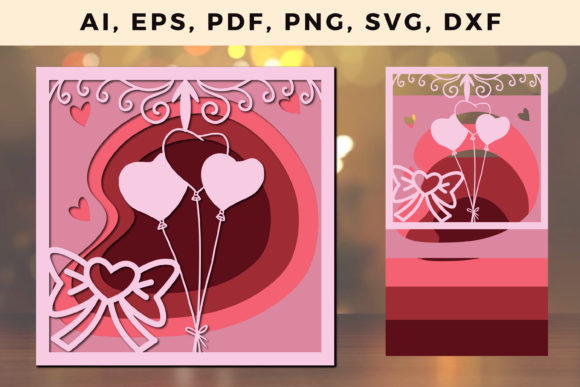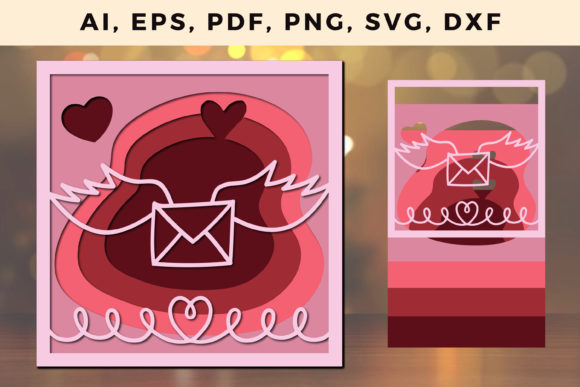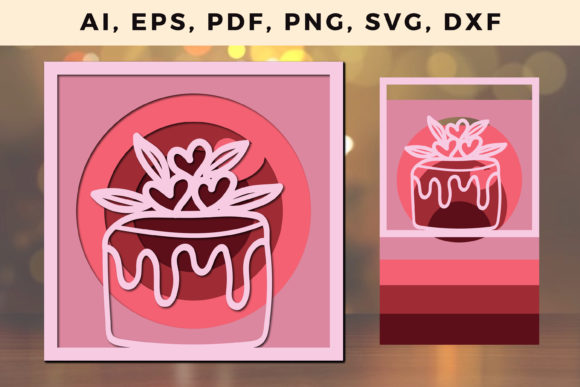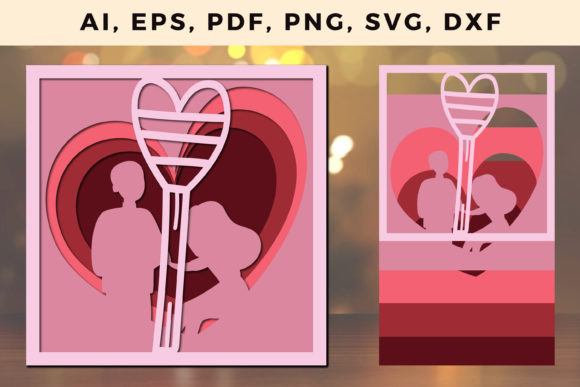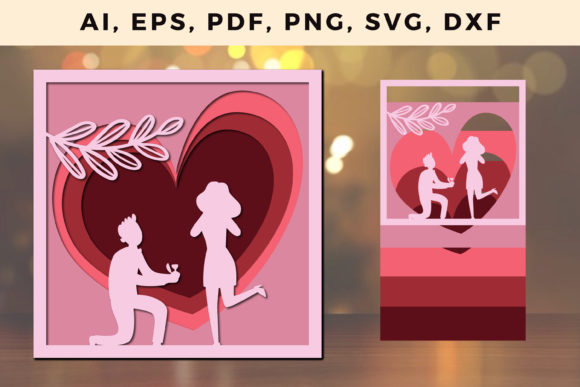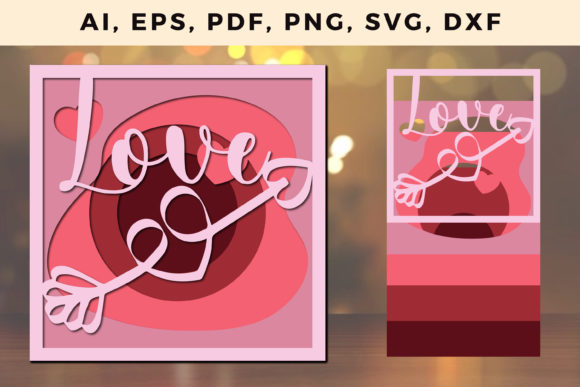
How Multi Layer Valentine's SVG Is Reshaping Creative Workflows in 2025
Digital design tools have evolved dramatically over the past decade, yet one format continues to quietly revolutionize how professionals approach themed content: the scalable vector graphic. Among the most compelling developments in this space is the Multi Layer Valentine's SVG, a structured vector file that separates visual elements—such as hearts, typography, floral motifs, and background textures—into distinct, editable layers. For designers, marketers, and content creators, this approach represents far more than a seasonal asset. It signals a broader shift toward modular, adaptable, and efficient creative production that aligns directly with how modern professionals work.
Understanding the Multi Layer Valentine's SVG begins with recognizing what layered vector graphics enable. Unlike flat image files, a multi-layer SVG allows the user to isolate individual components without losing resolution or file integrity. For a Valentine's Day campaign, this means a heart graphic can be recolored independently from the accompanying text, or a decorative border can be removed entirely without affecting the central illustration. This level of control is not merely convenient—it fundamentally changes how quickly a team can iterate, customize, and deploy seasonal content at scale.
The Shift From Static Assets to Modular Design Systems
For years, creative professionals relied on static image files for holiday campaigns. A Valentine's Day poster was typically exported as a single flattened image, meaning any revision required reopening the original source file, making edits, and re-exporting. This workflow created bottlenecks, especially for teams managing multiple formats—social media graphics, email headers, print flyers, and website banners. The rise of the Multi Layer Valentine's SVG has disrupted this pattern by introducing a modular design philosophy.
Consider a typical scenario: a marketing team needs to localize a Valentine's Day promotion for three different regions. One version uses a red-and-pink palette, another uses gold and cream, and a third incorporates a minimalist black-and-white aesthetic. With a traditional flat image, the team would need to commission three separate designs or manually recreate each iteration. With a multi-layer SVG, the designer simply unlocks the layers, adjusts the fill colors, and exports all three variations in minutes. This efficiency is not just about speed—it reduces creative fatigue, lowers production costs, and ensures consistency across every touchpoint.
The broader trend here is the move toward design systems that prioritize reusability. Brands are increasingly building libraries of modular SVG assets that can be mixed, matched, and recolored for any campaign. Valentine's Day is simply one seasonal use case within a much larger ecosystem. The principles behind a Multi Layer Valentine's SVG—separate text layers, isolated decorative elements, independent background layers—mirror the same logic used in enterprise design systems for websites, apps, and product interfaces. This convergence between seasonal creativity and long-term design strategy is why professionals are paying close attention.
Why Multi Layer Valentine's SVG Resonates With Today's Professionals
The attention around Multi Layer Valentine's SVG is not accidental. It reflects several converging needs in the creative and business landscape. First, there is the demand for speed. In a world where social media trends shift overnight, being able to adapt a Valentine's Day graphic in real time—changing a greeting from "Happy Valentine's Day" to "Love Is in the Air" without rebuilding the entire composition—is a competitive advantage. Second, there is the push for personalization. Consumers increasingly expect content that feels tailored to them. A layered SVG enables small businesses to create unique variations for different audience segments without hiring a dedicated designer for each version.
Third, there is the technical reality of responsive design. SVG files scale infinitely without losing quality, which means a single Multi Layer Valentine's SVG can serve as the source file for everything from a 1080p Instagram post to a billboard-sized print. For entrepreneurs and freelancers who manage their own marketing, this eliminates the need to maintain multiple file sizes or resolution-specific exports. The vector format also loads faster on web pages than raster images, which directly impacts user experience and page performance metrics.
Beyond these practical considerations, there is a cultural shift underway. Valentine's Day content has moved beyond simple hearts and cupid motifs to embrace diverse expressions of love—self-love, friendship, family bonds, and community care. A Multi Layer Valentine's SVG supports this evolution because it allows creators to swap out elements, adjust tones, and reframe the message without starting from scratch. A graphic that originally featured a romantic couple can be adapted to highlight a single person with a self-affirmation quote by simply toggling layers. This flexibility mirrors the broader societal move toward inclusive and adaptable visual communication.
How Freelancers and Small Teams Are Leveraging the Format
For freelancers and boutique agencies, time is the most constrained resource. The ability to purchase or create a single Multi Layer Valentine's SVG pack and generate dozens of unique deliverables from it is transformative. A designer working with a local coffee shop can produce a Valentine's Day social media series—each post featuring a different flavor of latte art, a unique greeting, and a customized color palette—from one base file. The layered structure means each post feels distinct without requiring separate design sessions.
This workflow also enables collaborative iteration. A freelancer can share an SVG file with a client, allow the client to preview individual layers, and receive feedback on specific elements without confusion. "Can we make the heart slightly larger?" becomes a simple layer adjustment rather than a full redesign. Entrepreneurs who hire remote contractors can provide a single layered SVG template and ask for regional variations, knowing the file structure is clear enough to prevent misinterpretation. The Multi Layer Valentine's SVG thus functions as both a creative tool and a communication artifact that reduces friction between stakeholders.
Technology and Tooling That Amplify the Format's Value
Software compatibility has been a crucial factor in the rising relevance of multi-layer SVGs. Modern design tools—including Adobe Illustrator, Figma, Inkscape, and Affinity Designer—fully support layered SVG import and export, making it easy for professionals to work across platforms. Many online graphic editors like Canva and Crello also accept SVG uploads and preserve layer structures, enabling non-designers to customize professional assets without advanced software. This democratization of design is particularly relevant for solopreneurs who lack formal design training but still need high-quality holiday content.
Furthermore, the integration of SVGs with web development tools has opened new possibilities. A Multi Layer Valentine's SVG can be embedded directly into HTML and styled with CSS, allowing developers to animate individual layers, trigger interactions, or adjust colors based on user preferences. For brands building interactive Valentine's Day microsites or email experiences, this capability eliminates the need for static image fallbacks. The layered format aligns with the growing expectation that digital experiences should be dynamic, lightweight, and accessible.
Practical Examples of Multi Layer Valentine's SVG in Action
To ground this discussion in practical terms, consider three real-world applications of the Multi Layer Valentine's SVG approach.
Example 1: E-commerce email campaigns. An online gift shop wants to send a Valentine's Day email series featuring different product categories. Using a single layered SVG template, the designer creates a base composition with a heart background, a text layer for the headline, and a product image placeholder. Each email variant updates the text layer to highlight "Gifts for Her," "Gifts for Him," and "Self-Love Treats," while the product placeholder is swapped out. The email renders cleanly across clients because SVGs are well-supported in modern email environments.
Example 2: Social media carousels. A content creator preparing a Valentine's Day Instagram carousel uses a multi-layer SVG where each slide is a distinct layer. The first layer shows the question "What does love mean to you?" The second layer reveals a heart illustration. The third layer displays a quote from a community member. By keeping each slide as a separate layer, the creator can rearrange, recolor, or update individual slides without affecting the overall design. This modular approach reduces the likelihood of errors and accelerates the publishing workflow.
Example 3: Print-on-demand merchandise. A print-on-demand seller designs Valentine's Day t-shirts using a multi-layer SVG file. Each layer corresponds to a color channel for screen printing: the red heart layer, the white text layer, and the pink floral layer. The seller can easily generate variations by hiding or recoloring layers, testing different color combinations without re-creating the artwork. This efficiency directly impacts profitability by reducing design time and enabling faster product launches.
Changing Needs and Preferences Driving Adoption
The relevance of the Multi Layer Valentine's SVG is inseparable from larger shifts in how professionals approach content production. One of the most significant changes is the move toward asynchronous collaboration. Teams no longer work in the same room or even the same time zone. A layered SVG file provides a structured, self-documenting format that team members can open and understand without lengthy explanations. The layers themselves serve as a visual legend: background layer, decorative layer, text layer, call-to-action layer. This implicit organization reduces onboarding time for new team members and minimizes the risk of errors when multiple people edit the same file.
Another driving factor is the growing emphasis on accessibility. Vector graphics inherently support better accessibility practices because they can be described using code, scaled for different screen sizes, and styled for high-contrast modes. A Multi Layer Valentine's SVG that separates text from decorative imagery ensures that screen readers can interpret the message accurately, which is a critical consideration for brands aiming to meet web accessibility standards. This technical advantage may seem niche, but as more companies formalize their accessibility policies, the ability to provide layered, semantic graphics becomes a compliance necessity rather than a nice-to-have.
Finally, there is the economic reality of shrinking budgets and rising expectations. Marketing departments are being asked to do more with less. A single Multi Layer Valentine's SVG that can generate ten, twenty, or fifty unique assets offers a return on investment that flat files simply cannot match. For freelancers bidding on projects, demonstrating familiarity with layered SVG workflows signals efficiency and professionalism. For entrepreneurs managing their own brands, it means maintaining a polished visual presence without overspending on design costs.
Connecting Multi Layer Valentine's SVG to Broader Industry Developments
The principles underlying the Multi Layer Valentine's SVG echo larger trends in technology and business. The move toward component-based architecture in web development—where reusable components are assembled into interfaces—mirrors the layer-based logic of SVGs. In marketing, the rise of content personalization platforms that dynamically assemble email and web content from modular assets aligns directly with the way layered SVGs can be reconfigured. Even in manufacturing and product design, the concept of modularity as a driver of efficiency and customization has become a central strategy.
Valentine's Day, as a culturally significant yet highly seasonal occasion, serves as an ideal proof case for these broader ideas. If a team can successfully implement a modular SVG workflow for Valentine's Day, they can apply the same methodology to other holidays, product launches, and evergreen campaigns. The Multi Layer Valentine's SVG is not just a file format—it is a workflow philosophy that prioritizes adaptability, scalability, and clarity. Professionals who adopt it are not merely keeping up with a trend; they are future-proofing their creative operations against the inevitable demand for faster, more flexible content production.
As the boundaries between design, development, and marketing continue to blur, the ability to work with intelligent, structured asset formats becomes a core competency. The Multi Layer Valentine's SVG is one of the most accessible entry points into this way of working. It requires no new software investment, no steep learning curve, and no overhaul of existing processes. It simply asks professionals to think differently about how they organize their creative materials—and that shift has implications far beyond February 14.
For anyone creating content in 2025, the message is clear: modularity is not a constraint but a liberation. The Multi Layer Valentine's SVG is a small but powerful example of how a thoughtful structural choice can unlock speed, consistency, and creativity across an entire organization. Whether you are a solo freelancer managing client campaigns or a marketing lead overseeing a distributed team, embracing layered vector assets is a practical, forward-looking decision that pays dividends with every seasonal cycle.